
To feel the pulse of today’s Russia, one paradoxically has to begin with a text more than a century old: Dmitry Merezhkovsky’s essay “The Little Head Droops” (Golovka Visnet). Written over a hundred years ago, it suddenly feels frighteningly current: the same spiritual convulsions, the same cultural complexes, the same endless attempt to understand “what is wrong with us.” None of that “eternity” Russian thought so loved to speak about — only a jammed mechanism, turning again and again in the same circle.
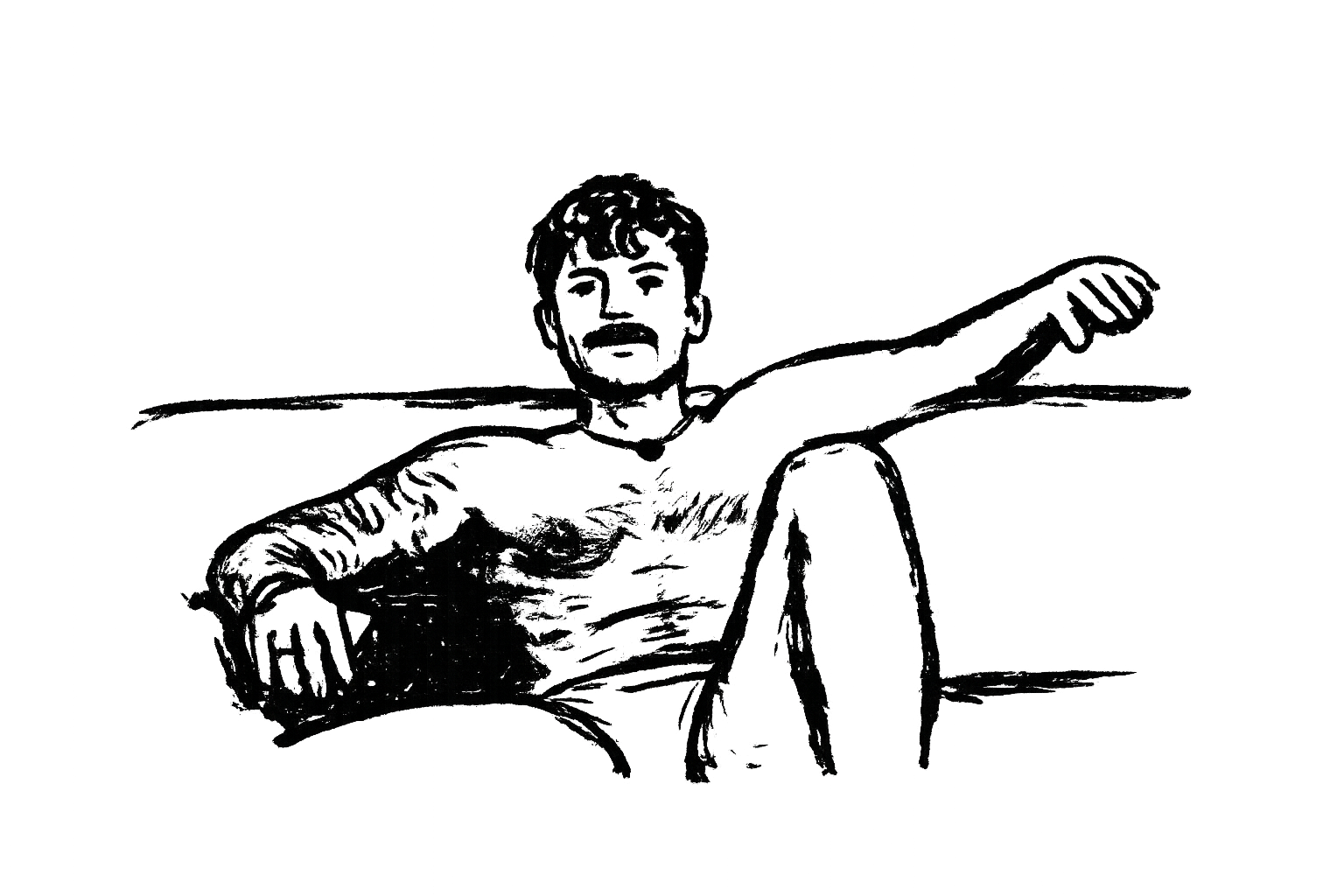
Russia, for Merezhkovsky, is Vasyuta: a child with a heavy gaze, saying, “some milk for me, mama — but I don’t feel like it…” (molochka by ty mne, mamka, — da ne khottsa…). There is not a drop of sweetness in that “I don’t feel like it,” only exhaustion and a strange, almost physical disgust with one’s own life. The helplessness and estrangement he writes about can be transferred all too easily onto the present day: a country stuck in its own past, unable either to renounce it or to acknowledge it honestly. History weighs down not as a “great tradition,” but as a chronic illness, one that slowly yet stubbornly destroys the organism.
Merezhkovsky, as a man of the fin de siècle, tries to grasp the mechanism of this Russian reaction to the world and, in essence, admits: it does not obey the usual laws. Not mechanics, but some strange, twitching metaphysics. Today this is felt even more sharply: Russia seems to be moving somewhere, for some reason, but this movement increasingly resembles not a path, but a prolonged fall. Every attempt to “settle one problem” turns into another new collapse, even more painful and dirtier than the last. The paradox is that the country constantly pretends to be emerging from crisis, while in fact it is merely stepping carefully into its next iteration.
What he called a “standing rebellion” now also sounds almost like documentary prose. This is neither rebellion nor obedience, but a viscous, learned helplessness: when protest has not even been suppressed, but seems to have been cancelled in advance. People live inside dictatorship and repression, but most often not as heroes, rather as patients: with dulled sensitivity, with the feeling that “it has always been this way and, most likely, will continue.” The image of the vanka-vstanka — the roly-poly toy that always rights itself — is another precise metaphor: Russia may suddenly jerk, overturn, straighten up, and then, with the same stubbornness, return to its original authoritarian position. Reforms, revolutions, “thaws” turn out to be brief episodes between long, drawn-out returns to the familiar vertical.
Especially unpleasantly recognizable is Merezhkovsky’s thought about the “depth of Russian reaction,” which almost automatically becomes religious. Today’s state eagerly returns religion to the role of lightning rod and justification. Church language, icons, processions with crosses — all of this is built into the state scenography, meant to sanctify not only “traditional values,” but also very concrete political decisions, including the war in Ukraine. As a hundred years ago, faith becomes an instrument of power, and instead of religious experience, what remains is decoration, convenient for television images and ceremonial speeches.
In this sense, “The Little Head Droops” ceases to be merely a historical document of the Silver Age. It is a mirror we are forced to hold up to the face again and again, each time discovering the same angle. History does not “teach”; at best, it repeats itself with minor stylistic changes. Russia’s present and future turn out to be tightly tied to its past, like to the same old clothes, long unchanged but stubbornly still worn. And the question Merezhkovsky asked of his own time sounds almost unchanged today: do we really not understand what we need, or are we simply afraid to admit to ourselves that we do not want to understand? Because otherwise, we would finally have to lift that “drooping little head” and look history straight in the eye.